Home › Asphalt Driveway Installation
Get a smooth, long lasting asphalt driveway installation in Nashville, TN from local specialists. We handle grading, drainage, and proper compaction for a driveway that looks great and performs for years. Schedule your free estimate today.
Precision Asphalt Nashville provides professional asphalt driveway installation throughout Nashville, TN, Tennessee and the surrounding area. Our licensed, insured crew delivers safe, clean, on-time work with a free estimate before anything begins. Call (615) 686-2795 or request your free quote.
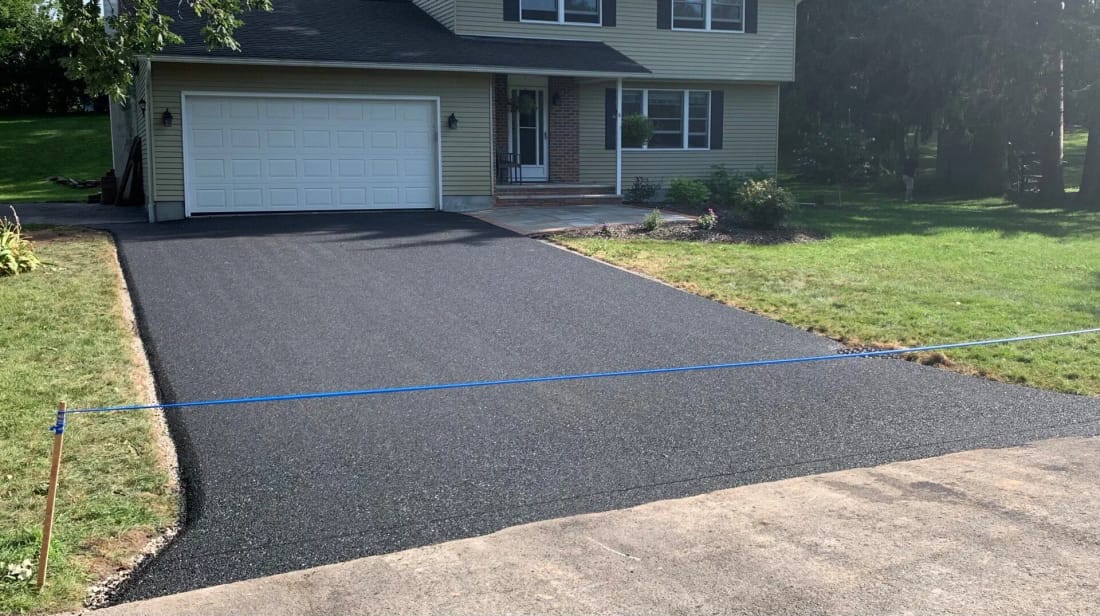
Asphalt driveway installation in Nashville done the right way
Precision Asphalt Nashville installs asphalt driveways that are built for Middle Tennessee conditions, not just for curb appeal on day one. Our crews work only in the Nashville area, so we understand the mix of clay and rock in local soils, how heavy summer storms wash across driveways, and how freeze-thaw cycles open up weak spots if the base is not prepared correctly.
When you call us for asphalt driveway installation, we start with a site visit, not a guess over the phone. We measure slope, check how water currently drains, look for soft spots or existing cracking in older pavement, and locate utilities. This allows us to tell you honestly whether you just need new asphalt on top of a solid base or a full tear out and rebuild from the ground up.
Instead of offering a single cookie-cutter driveway, we talk through how you actually use the space. In many Nashville neighborhoods, driveways double as parking pads for multiple vehicles, trailers, or work trucks. That affects the thickness of the asphalt, the type of base stone, and the reinforcement of the edges. Our goal is to design a driveway that fits your property, your traffic, and your budget, and that will stay solid under real-world use.
Step-by-step: how we install your asphalt driveway
A lasting asphalt driveway installation is 80 percent preparation and 20 percent paving. Precision Asphalt Nashville follows a clear, documented process so you know exactly what is happening on your property.
1. Demolition and removal: If you have an old driveway, we mill or break up the existing asphalt or concrete, haul it away, and recycle the material where possible. This exposes the native soil so we can assess its strength.
2. Subgrade evaluation and stabilization: We proof-roll the exposed soil with a fully loaded truck or roller to reveal soft or pumping spots. In parts of Nashville with loamy or clay-heavy soils, we may undercut 6 to 12 inches in weak areas and replace with compacted crushed stone. On steeper driveways, we may recommend geotextile fabric under the stone to separate fines and reduce movement.
3. Base installation: We typically install 4 to 8 inches of graded aggregate base, compacted in multiple lifts with a vibratory roller. For homes with heavy vehicle traffic, boats, or RVs, we lean toward the higher end of that range. Proper base thickness is one of the biggest differences between a driveway that lasts 20 years and one that ruts in 3.
4. Grading and drainage shaping: Before any asphalt is placed, we shape the base to achieve correct slopes. In Nashville we design driveways to shed water toward yards or drains and away from garages, basements, and neighbor properties. We may build a slight crown in wider driveways or a cross slope of at least 2 percent for fast drainage.
5. Asphalt placement: For most residential driveways we install a binder course and a surface course or a single thicker lift of surface mix, depending on use. The mix is delivered hot from a local TDOT-approved plant, placed with a paver where access allows, and compacted immediately with steel drum and plate compactors along edges.
6. Edging and cleanup: We finish the edges neatly, feathering into yards or adjoining surfaces. Where cars will occasionally drive off the side, we often recommend a stone shoulder to prevent edge cracking. The crew then sweeps, blows, and hauls away all debris.
7. Final walk-through and care instructions: Before we leave, we walk the driveway with you, explain cure times, show you where not to park right away, and answer questions so you know how to protect your new surface.
Material options and design choices for your new driveway
Residential asphalt driveway installation in Nashville is not one-size-fits-all. Precision Asphalt Nashville gives you clear options so you can choose the right structure and look for your property.
Asphalt mix types: For most homes, we recommend a dense-graded surface mix around 1.5 to 2 inches thick over a strong base. For heavier traffic or steeper hills like you see in parts of Bellevue or Forest Hills, we may add a binder course underneath for added strength. We can also use a finer top mix near garages or entry areas to create a smoother, tidier finish.
Thickness choices: Light-use driveways that see only passenger cars can often perform well with 2.5 to 3 inches of total asphalt over a good base. If you routinely park work trucks, campers, or equipment, we may step that up to 3.5 to 4 inches or more and beef up the base. We explain why we recommend a certain thickness and how it affects both cost and lifespan.
Layout and shape: Many Nashville homes were built with narrow, straight driveways that do not match how families live today. During installation we can widen parking areas, add turnarounds so you are not backing into busy streets, or extend the driveway to side yards or detached garages. Gentle curves can improve both function and appearance, especially on deeper lots.
Edges and transitions: Where your driveway meets the street, we coordinate with Metro or relevant jurisdictions so that apron transitions are smooth and legal. At the house end, we adjust the grade carefully to avoid creating a lip at the garage slab, which can catch water or snow. If your driveway meets a gravel area or patio, we plan that joint so it does not become a pothole line over time.
Color and finish: Standard hot mix asphalt is dark black when installed and weathers to a dark charcoal. If you want a more refined look, we can prepare the surface specifically for early sealcoating once it has cured and settled, which helps even out color and adds a richer finish.
Local Nashville factors that affect cost and planning
Two driveways of the same size can have very different prices, especially in and around Nashville. Precision Asphalt Nashville is upfront about what affects your asphalt driveway installation cost so you can plan and compare quotes accurately.
Access and layout: Tight rear alleys in older neighborhoods or steep, winding hills in parts of South Nashville and Antioch can require smaller equipment, more handwork, and extra time. Straight, open driveways are more efficient to build and usually cost less per square foot.
Existing conditions: If your old driveway has severe alligator cracking, sinking near the garage, or standing water, that usually signals base or subgrade failure. In those cases, simply putting new asphalt on top would be a waste of money. Correcting drainage or rebuilding the base may increase upfront cost but prevents early replacement.
Soil and drainage: Lots down in low-lying or flood prone sections of the city often have softer soils that need thicker stone or underdrain solutions. Properties on rockier ground may require more effort to shape grade but offer stronger support once complete. Because we work across Davidson County and nearby communities every day, we can often anticipate these issues before we dig.
Driveway width and parking needs: Wider parking pads and turnarounds add square footage, which adds cost, but in many cases the added utility is worth it. We help you weigh the cost difference between a basic single-lane strip and a layout that actually fits all your vehicles.
Timing and season: In Middle Tennessee, true winter paving windows are shorter, and we plan around temperature and weather to ensure proper compaction and bonding. Sometimes waiting for a better weather window produces a better driveway than rushing into a cold snap. We explain those tradeoffs before scheduling your project.
Common driveway problems we prevent and how we fix them
Failing asphalt driveways across Nashville usually share the same root causes: thin or poorly compacted base, trapped water, and edges that were not supported. At Precision Asphalt Nashville, we design and install to avoid these problems from the start.
Cracking and alligatoring: When asphalt flexes over a weak base or saturated soil, it fractures in a pattern that looks like an alligator hide. To prevent this, we test and compact the base thoroughly and address soft spots during installation. If you already have this kind of damage, we usually recommend full-depth replacement rather than surface patching.
Standing water and icy spots: Depressions hold water, which weakens asphalt and turns into hidden ice in winter. During installation we use string lines and laser levels to confirm slopes, not just the operator's eye. On driveways with low points that cannot be regraded easily, we may add small catch basins or trench drains to move water away.
Edge breakup: The outer 6 to 12 inches of a driveway carry a lot of stress from tires dropping off the side. Without support, those edges crack and crumble. We fight this by compacting stone all the way to the edge, giving a slight angle rather than a vertical drop, and recommending a gravel shoulder or topsoil backfill in lawn areas.
Oil and coolant damage: Nashville commuters and work vehicles often drip fluids in the same spots over and over. We advise customers to address chronic leaks quickly, and during your final walk-through we explain where to use absorbent and when to call us for localized repairs instead of letting chemical damage spread.
Tree root heaving: Older neighborhoods with mature oaks and maples sometimes see driveway lifting where roots grow beneath the pavement. When planning a new installation, we look at trunk locations, likely root paths, and grade options to reduce conflict. In some cases, adjusting the driveway alignment a few feet can prevent years of future movement.
What to expect before, during, and after installation
Knowing what will happen at each stage makes an asphalt driveway installation far less stressful. Precision Asphalt Nashville keeps homeowners informed from the first visit through the final rollout of the roller.
Before work starts: We confirm measurements, final layout, and mix type. If permits or HOA approvals are required, we provide drawings or descriptions to help you secure them. We also mark start dates, estimated duration, and what you need to move or protect, such as vehicles, trailers, or porch items near the work area.
During construction: A typical residential driveway takes one to three workdays, depending on removal, base work, and size. Our crew chief is on-site and available to answer questions. There will be trucks bringing stone and hot mix, rollers operating, and some noise. We plan staging so your neighbors are impacted as little as possible and keep the street clear when we are done each day.
Traffic and parking: You will not be able to use the driveway while it is being removed, built, and compacted. Once the final surface is in, most driveways can handle light foot traffic the same day and vehicle traffic after 24 to 48 hours, depending on temperature. In hot summer weather we may recommend waiting a bit longer before parking heavy vehicles.
After completion: Asphalt continues to cure and harden for several months. During that time, we advise against sharp turns of steering wheels while stationary, parking heavy items in one place for long periods, or using kickstands without pads under them. We also suggest a timeline for the first sealcoat, usually after the first full season, and explain routine maintenance that can add many years to your driveway's life.
Communication: If weather interferes, especially during rainy or very cold spells that are common in Nashville shoulder seasons, we reschedule based on both your availability and material performance, not simply to keep our calendar full. You always know the revised plan before crews arrive.
Why homeowners across Nashville choose Precision Asphalt Nashville
Choosing the right contractor for asphalt driveway installation matters more than choosing the lowest price. Precision Asphalt Nashville focuses only on paving and related site work, so every decision we make is about long-term performance in this specific climate and soil.
Local expertise: Our estimators and crew leaders have worked for years across Davidson County and nearby communities. We know how a driveway in Sylvan Park differs from one on a rural edge of Goodlettsville, and we adjust designs accordingly. That local track record means we can often point to past projects near you as examples of our work.
Transparent recommendations: When we inspect your driveway area, we explain what we see in plain language. If your base is solid and only the surface has failed, we will say so and quote resurfacing where appropriate. If deeper issues exist, we show you where and why, so you can see the logic of a full rebuild.
In-house crews and equipment: We use our own trained teams and maintain our equipment so that paving happens at the right temperature and speed. This reduces the risk of cold seams, low compaction, and thin spots that shorten the life of a driveway.
Detailed proposals: Our written proposals spell out base thickness, asphalt thickness, mix type, and any drainage work, not just a lump sum and a vague description. You can compare apples to apples with other bids and see exactly what your investment buys.
If you are planning a new asphalt driveway installation or replacing a failing one anywhere in the Nashville area, contact Precision Asphalt Nashville to schedule a site evaluation and a clear, detailed quote tailored to your property.