Home › Road, Street, and Municipal Paving
Turn to experienced professionals for road paving in Nashville, TN. We construct and resurface streets, subdivisions, and municipal roads that stand up to heavy traffic. From base preparation to final pavement, our crews deliver smooth, long lasting asphalt roadways.
Precision Asphalt Nashville provides professional road paving throughout Nashville, TN, Tennessee and the surrounding area. Our licensed, insured crew delivers safe, clean, on-time work with a free estimate before anything begins. Call (615) 686-2795 or request your free quote.
Road paving expertise tailored to Nashville streets
Road, street, and municipal paving in Nashville is different from paving a driveway or a parking lot. You are dealing with heavier traffic, TDOT and city standards, public safety, and long-term maintenance budgets. Precision Asphalt Nashville focuses specifically on those realities, so every road paving project is designed for the traffic loads, drainage patterns, and soil conditions you actually see across Davidson County.
On a typical road paving job, we begin with a detailed site assessment. We look at existing pavement thickness, base condition, traffic counts, truck routes, drainage structures, and any recurring failure points like rutting or edge breakup. In Nashville, many subdivision streets were built decades ago with thinner sections than current standards. For those, we often recommend strengthening the base and increasing asphalt thickness rather than just putting on another thin overlay that will fail again.
We also factor in local weather cycles. Freeze-thaw swings in Middle Tennessee and occasional heavy rain events mean road edges, joints, and utility cut patches must be built more carefully. We review how stormwater moves along curbs, gutters, and ditches, then adjust slopes and tie-in elevations to prevent ponding and premature cracking. With Precision Asphalt Nashville you get a road paving plan that is specific to your stretch of pavement, not a one-size-fits-all template.
How professional road paving actually gets done
For municipal and street paving in Nashville, the process is structured and methodical. First we handle traffic control plans, signage, and any required coordination with Metro Nashville, TDOT, or local HOAs. Keeping residents and drivers informed is as important as the paving itself, so schedules and access plans are communicated clearly before work begins.
Next we perform milling or full-depth reclamation, depending on the condition of the existing road. Milling grinds off a set depth of the old asphalt, usually 1 to 3 inches for overlays or more if we are correcting grades. For roads with structural failures, we may remove the asphalt entirely and stabilize the base with added stone and compaction, or use cement-treated base if the subgrade is weak.
Once the surface is milled or excavated, we fine-grade and compact the base using vibratory rollers and plate compactors at edges and around utilities. This step is where a lot of long-term quality is built in. Even minor soft spots will show up later as dips or potholes, so our crew probes and proofs the base and corrects weak areas immediately.
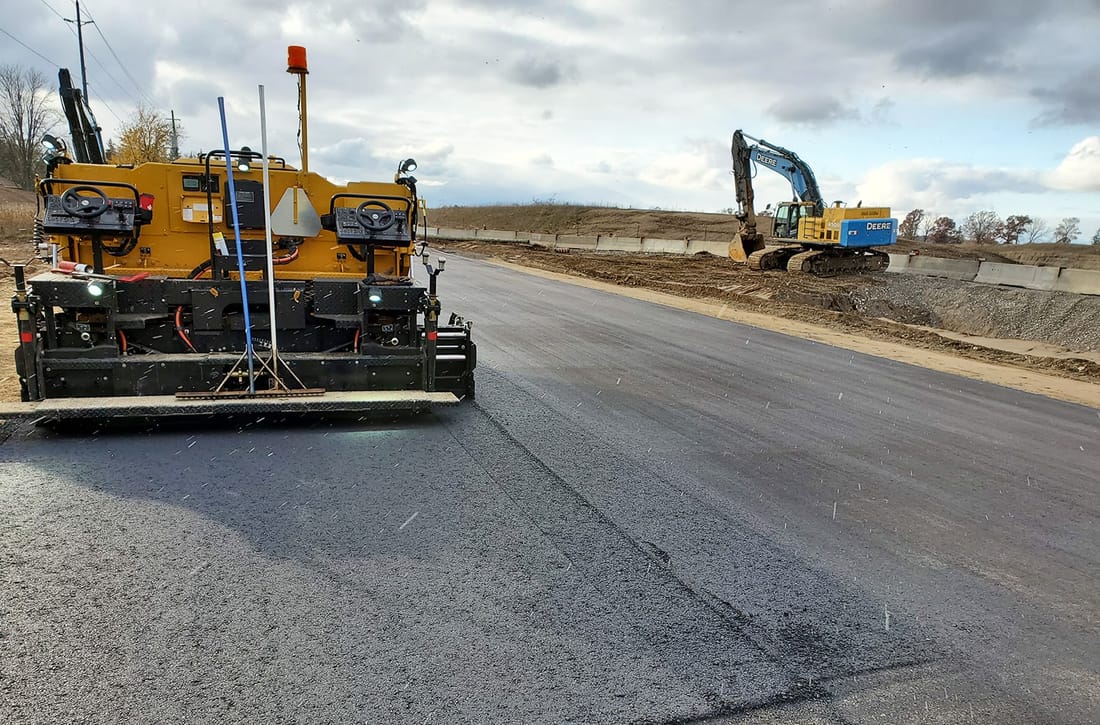
We then place hot-mix asphalt in one or more lifts. Residential streets may get a binder course plus a surface course, while busier collector roads might get two structural lifts and a high-performance surface mix. Every lift is placed at the right temperature, spread with pavers set to precise thickness, and compacted with steel drum and pneumatic rollers to reach target density. Joints between lanes and at tie-ins are carefully treated, since poorly built joints are often where cracks start.
Material options and mix designs for Nashville traffic
Not all asphalt mixes are the same, and choosing the right one for road paving is critical. In Nashville, local plants supply a variety of Tennessee DOT approved mixes, and Precision Asphalt Nashville selects them based on traffic level, location, and budget.
For neighborhood streets with mostly passenger vehicles, we typically use a dense-graded surface mix that balances smoothness, durability, and cost. For bus routes, industrial areas, or streets that carry frequent heavy trucks, we increase the aggregate size and asphalt binder content or specify a stronger binder grade that resists rutting in summer heat.
On roads that see a lot of stop-and-go traffic, such as near schools, shopping centers, or intersections, we may recommend polymer-modified asphalt for the top layer. This material is more resistant to shoving and deformation, which are common where vehicles brake or turn sharply. In low-lying or flood-prone sections, we pay close attention to elevation and may suggest a more open-graded base layer that helps move water away from the structure.
Color and texture are also part of the conversation for some municipal projects. While standard black asphalt is the default, we can work with specialty surface treatments for crosswalks or multi-use paths, and we can incorporate reflective striping and markers that meet city standards and improve nighttime safety.
What drives the cost of road, street, and municipal paving
Understanding what impacts pricing helps city staff, property managers, and HOAs budget realistically. The main cost drivers are thickness and total square yardage, but there are several other factors that matter on Nashville road paving projects.
Existing conditions have a big impact. If the road simply needs milling and overlay, costs are lower than if the base is failing and requires undercutting, stabilization, or drainage upgrades. Roads that sit on clay-heavy soils, which are common in parts of Middle Tennessee, may require more stone base and more compaction effort.
Access and traffic control also influence price. A straight, open residential street where we can pave continuously is more efficient than a downtown block with limited working hours, tight transitions, and heavy pedestrian traffic. Night work or phased work to maintain constant access to hospitals, schools, or businesses can add to labor and traffic control costs, but may be necessary for safety and convenience.
Finally, the choice of asphalt mix and performance expectations affect the budget. A thicker, higher quality section often has a higher upfront cost but can substantially reduce the frequency and cost of future maintenance. Precision Asphalt Nashville helps you compare options in clear terms, such as life-cycle cost over 10 to 20 years, not just initial construction price.
Common road problems in Nashville and how we solve them
Road paving in Nashville often means fixing issues that have developed over years of use and patching. Precision Asphalt Nashville sees recurring patterns across Metro streets, county roads, and private roadways, and we design repairs that address the underlying causes instead of just hiding symptoms.
Alligator cracking and potholes are usually signs of structural failure, not just surface wear. For those areas we typically cut out the failed pavement, inspect the base, and then rebuild with added stone and thicker asphalt lifts. Simply filling potholes without fixing the base will usually lead to repeat failures.
Edge failures are another local issue, especially on rural or older subdivision roads with narrow shoulders. When vehicles routinely drive off the edge of the pavement, the side breaks off and the crack migrates inward. We correct this by reinforcing the edge with additional base material, widening slightly where practical, and compacting the shoulders so they support the pavement rather than letting it hang unsupported.
Drainage-related problems, such as longitudinal cracking along gutters or sinking around inlets, are solved by improving water flow. That can mean adjusting inlets, reshaping gutter lines, installing underdrains in persistent wet spots, or modifying slopes so water does not sit against the pavement. We coordinate with utility providers when manholes or water valves are too high or too low, adjusting them so the finished road is both smooth and properly drained.
What Nashville clients should know before hiring a road paving contractor
Before you approve a road, street, or municipal paving contract, there are a few key points to verify. First, ask how the contractor evaluates base and subgrade conditions, not just the asphalt surface. A detailed coring or test pit plan is a positive sign on larger projects. For smaller roads, at least confirm that they will address soft spots, not simply pave over them.
Second, request a clear section design in writing. This should specify milling depth, base preparation, thickness of each asphalt lift, and the exact mix types to be used. Precision Asphalt Nashville provides this level of detail on every proposal, so you know exactly what structure you are buying and can compare apples to apples between bids.
Third, clarify the plan for traffic control and communication with residents or businesses. Ask how emergency vehicle access will be maintained, how driveway access will be handled during paving, and how long each stretch of road will be impacted. A contractor who has worked extensively in Nashville will be familiar with Metro requirements, school zones, and popular event schedules, and will schedule accordingly to reduce disruption.
Finally, talk about warranty and aftercare. For public and private road clients, we walk the project with you after completion, document conditions, and explain what to watch for in the first seasons. If adjustments are needed, such as minor joint sealing or striping touch-ups, handling them quickly keeps your new road performing as designed.