Home › Commercial Gravel-to-Asphalt Conversions
Upgrade dusty, uneven surfaces with commercial gravel to asphalt conversions in Nashville, TN. We turn gravel parking areas and drives into smooth, marked asphalt lots. Improve customer experience, control mud and dust, and reduce maintenance at your property.
Precision Asphalt Nashville provides professional commercial gravel to asphalt throughout Nashville, TN, Tennessee and the surrounding area. Our licensed, insured crew delivers safe, clean, on-time work with a free estimate before anything begins. Call (615) 686-2795 or request your free quote.
Commercial Gravel-to-Asphalt Conversions for Nashville Properties
If your commercial lot, drive lane, or equipment yard is still gravel, converting to asphalt can immediately reduce maintenance headaches and present a more professional look. Precision Asphalt Nashville specializes in commercial gravel to asphalt projects across the Nashville metro area, including older industrial sites, retail centers along Murfreesboro Pike, and growing warehouse corridors near I-24 and I-65.
We focus on the practical side first. How are trucks using the space. Where does water currently pool. How often do you have to regrade the gravel. We walk the site with you, look at traffic patterns, drainage, and existing base thickness, then design an asphalt section that fits how your property is actually used. A small medical office parking lot off Charlotte Avenue does not need the same pavement structure as a heavy trucking yard in La Vergne.
Our goal is to turn a dusty, rut-prone gravel surface into a smooth, durable asphalt lot that stands up to Middle Tennessee freeze-thaw cycles and heavy summer storms. Each project plan is built around your operating hours, so restaurants, auto shops, and retail centers can stay accessible while we work.
How a Gravel Lot Becomes an Asphalt Surface
A proper commercial gravel to asphalt conversion in Nashville is more than just paving over rock. Precision Asphalt Nashville follows a step-by-step process that protects your investment.
First, we evaluate the existing gravel base. We check depth, compaction, and material type, and look for soft spots created by years of traffic or poor drainage. In some older lots around downtown and the Fairgrounds area, we often find mixed fill or construction debris under the gravel, which must be corrected before any paving.
Second, we shape and compact the base. Using graders and compactors, we establish the right crown or cross-slope so water leaves the pavement instead of sitting in the wheel paths. If the gravel layer is too thin or contaminated, we bring in new graded aggregate base stone and compact it in lifts to reach the strength required for your expected traffic loads.
Third, we install a binder course if the site needs it. For heavier-use commercial properties like distribution centers or fueling stations, we commonly recommend a two-course asphalt system: a thicker base or binder layer for strength, and a finer surface layer for smoothness and appearance.
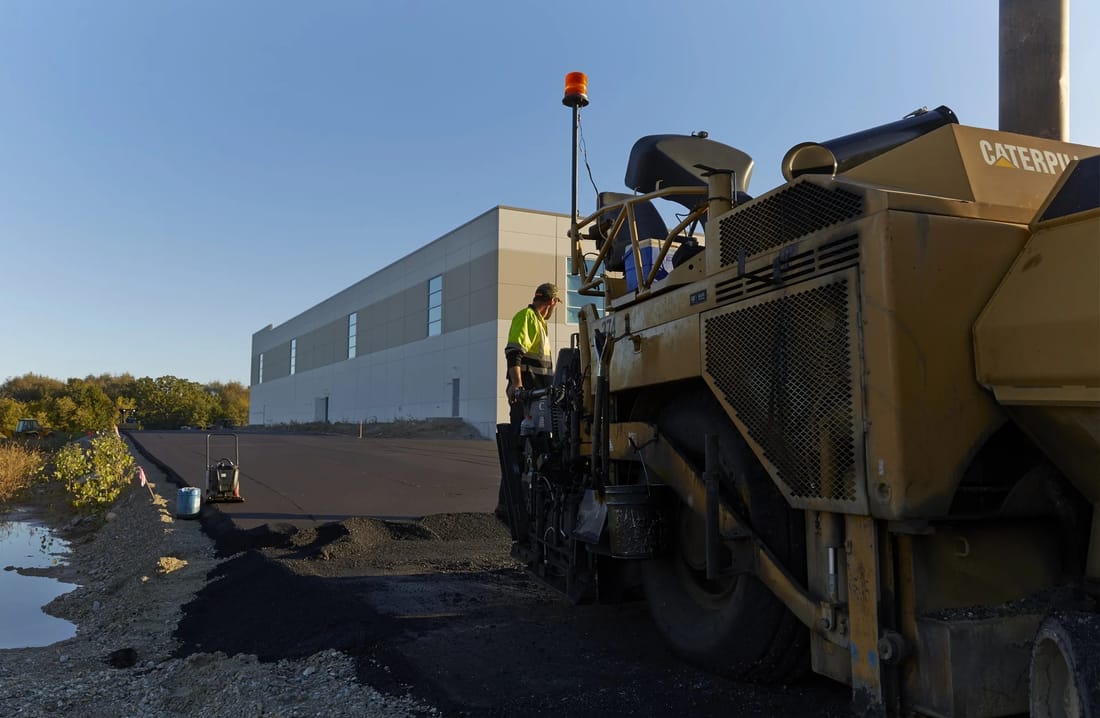
Finally, we place the surface asphalt, compact it to the designed thickness, and complete striping, wheel stops, and signage as needed. We handle tie-ins to existing city streets, dumpster pads, and building entrances so your tenants and customers have clean transitions without abrupt bumps or tripping edges.
Material Options and Pavement Designs That Fit Your Use
Different commercial sites in Nashville demand different pavement designs. Precision Asphalt Nashville does not use a single mix and thickness for every job. Instead, we match asphalt mixes and section thickness to how your lot will actually perform in the real world.
Light duty use, like professional offices, churches, and small retail in areas such as Green Hills or Donelson, typically calls for a compacted aggregate base with a single asphalt lift of moderate thickness. The mix can focus more on appearance and smoothness since heavy trucks are rare.
Moderate duty use, such as larger shopping centers, multi-tenant office complexes, and apartment communities, often benefit from a two-lift system. We install a thicker base or binder course to distribute loads from garbage trucks, delivery vans, and moving trucks, then a finer surface course for the parking and driving experience.
Heavy duty use, such as trucking yards, distribution hubs near the airport, and industrial properties along the river, may require thicker sections, higher-stability asphalt mixes, and sometimes reinforced loading zones at docks and dumpster locations. We may also recommend concrete pads in very high point-load locations, with asphalt surrounding them.
We can explain the pros and cons of different Tennessee Department of Transportation style mixes versus custom commercial blends, and how choices like mix type, thickness, and base improvements drive the overall project cost and long-term performance.
Local Drainage, Soil, and Weather Factors in Nashville
Nashville properties bring a mix of limestone, clay pockets, and rolling grades. These local conditions affect how a commercial gravel to asphalt conversion should be designed. Precision Asphalt Nashville has seen what happens when these issues are ignored: rutting along truck paths, edge failures near embankments, and potholes where water collects after every thunderstorm.
We start by looking at where water is going right now. Gravel tends to hide drainage problems because water can soak through, but once asphalt is installed, surface drainage must be right. We use laser grading to achieve consistent slopes toward catch basins or sheet flow to swales, and we coordinate with your civil engineer if the site is part of a larger development.
Soil conditions matter as well. In some parts of Nashville, especially near creek corridors, subgrade soils can be soft or highly expansive. In these areas we may undercut poor soils and replace them with compacted stone, add geotextile separation fabric to keep fines from pumping into the base, or increase base thickness to spread loads. These steps cost more up front, but they are far cheaper than dealing with repeated failures later.
Local weather plays a role too. Freeze-thaw cycles and hot summers in Middle Tennessee can cause marginal pavements to crack early. We account for these temperature swings in our mix recommendations, compaction practices, and joint layout so your new asphalt lot holds up for years.
What Impacts Cost and Timeline for Converting Gravel to Asphalt
Most commercial gravel to asphalt projects in the Nashville area fall into a few cost drivers: base condition, required pavement thickness, site logistics, and drainage upgrades. Precision Asphalt Nashville is straightforward about these items so you can budget with realistic numbers.
If your existing gravel has good depth and compaction, and there are no major soft spots, costs are lower because we can regrade and compact instead of rebuilding. When we find shallow gravel, buried debris, or pumping subgrade, we will show you the problem areas and explain options, from spot repairs to full-depth reconstruction.
Traffic demands and building use also affect cost. A light-duty parking area for a small medical office may only require one lift of asphalt, while a busy retail center with regular semi traffic will need thicker pavement and possibly a binder course. The more structural strength required, the more material and labor the project will need.
Site access and phasing can influence pricing and schedule. Working in tight urban sites near downtown or in busy shopping centers often means staging work in phases, working off-peak hours, and coordinating temporary access routes. We plan this with you in advance so tenants and customers still have a way in and out while we convert sections from gravel to asphalt.
Most mid-sized commercial lots can be completed in a few days of actual on-site work, weather permitting. Larger distribution yards or projects with undercut and drainage work may extend to a week or more. We provide a clear schedule, including cure and striping times, so you know exactly when the lot will be fully usable.
What Nashville Owners Should Ask Before Hiring a Paving Contractor
Before you commit to a commercial gravel to asphalt conversion, there are a few questions every Nashville property owner or manager should ask. Precision Asphalt Nashville encourages you to use these questions with any contractor, including us.
Ask how they evaluate the existing gravel base. If the answer is only a quick drive over the lot, that is a red flag. A proper evaluation includes checking depth, moisture, and compaction, and identifying soft zones or drainage problems.
Ask what pavement section they are proposing and why. You should hear a clear explanation of base thickness, asphalt thickness, and mix type tied to your expected use, such as passenger vehicles, box trucks, or tractor trailers. Generic answers like "we always put down 2 inches" can indicate a one-size-fits-all approach that might not suit your property.
Ask how they will handle drainage and tie-ins to existing structures, sidewalks, and city streets. Clean transitions, compliant slopes, and properly located drains are critical to long-term performance and user safety.
Finally, ask for a realistic maintenance plan. A good contractor will discuss crack sealing, sealcoating timelines, and simple practices like keeping drains clear so your new asphalt surface lasts as long as possible. When we finish a project, we leave you with specific maintenance recommendations based on your site, not a generic brochure.