Home › Parking Lot Sealcoating & Maintenance
Protect your commercial investment with parking lot sealcoating in Nashville, TN. We clean, crack seal, and apply premium sealer to resist UV, water, and oil. Regular maintenance keeps your lot looking sharp and extends pavement life, saving you money over time.
Precision Asphalt Nashville provides professional parking lot sealcoating throughout Nashville, TN, Tennessee and the surrounding area. Our licensed, insured crew delivers safe, clean, on-time work with a free estimate before anything begins. Call (615) 686-2795 or request your free quote.
Protecting Your Nashville Parking Lot With Smart Sealcoating
If your parking lot is starting to look faded, cracked, or rough, sealcoating is usually the most cost‑effective way to protect what you already paid for. At Precision Asphalt Nashville, we focus on practical, long‑lasting parking lot sealcoating and maintenance tailored to Middle Tennessee weather and traffic patterns.
Nashville’s hot summers, sudden storms, and winter freeze‑thaw cycles are tough on asphalt. UV sunlight dries out the binder, heavy afternoon rains push water into tiny surface openings, then cold snaps expand that moisture into cracks and potholes. Sealcoating creates a protective layer on top of your existing asphalt that slows this damage and keeps water and oil from soaking in.
Most commercial and multifamily properties in the Nashville area, from 1980s office parks in Brentwood to newer retail centers along Nolensville Pike, were paved years ago and often never sealed on a consistent schedule. That usually means oxidation, raveling (the surface stones coming loose), and lots of patchwork striping. Our approach is to evaluate what you have, address small failures before they turn into big ones, then sealcoat and re‑stripe so the lot works better for your customers and looks professional.
Sealcoating will not fix structural failures, but when done at the right time it can extend the life of your asphalt by many years, postpone costly mill and overlay projects, and improve the appearance of your property quickly with minimal downtime.
How Our Parking Lot Sealcoating Process Works
Good sealcoating is mostly about preparation and timing. Here is how a typical parking lot project with Precision Asphalt Nashville works from start to finish.
First, we walk the lot with you. We look for alligator cracking, potholes, low spots that hold water, oil‑soaked areas, and damaged or confusing striping. For older properties like mid‑century apartment complexes in Donelson or small churches in East Nashville, we often find a mix of original asphalt and patches. We put together a written plan that separates repairs from sealcoating so you know exactly what each item costs and why.
Next comes cleaning and prep. We use high‑powered blowers and steel wire brooms to remove dust, leaves, and loose rock. In tight corners or along curbs, we may use hand scrapers so the sealer can bond to clean material. Oil‑stained areas are primed with an oil spot primer so the sealer will adhere instead of peeling away in a few months.
Then we handle crack filling and patching. Wider linear cracks are cleaned out and filled with hot or cold pour crack sealant depending on their size and movement. Potholes or severely broken areas might be saw‑cut and replaced with new hot‑mix asphalt before sealing. In older Nashville lots where tree roots have lifted the pavement, we will often recommend localized removal and replacement rather than just sealing over the hump.
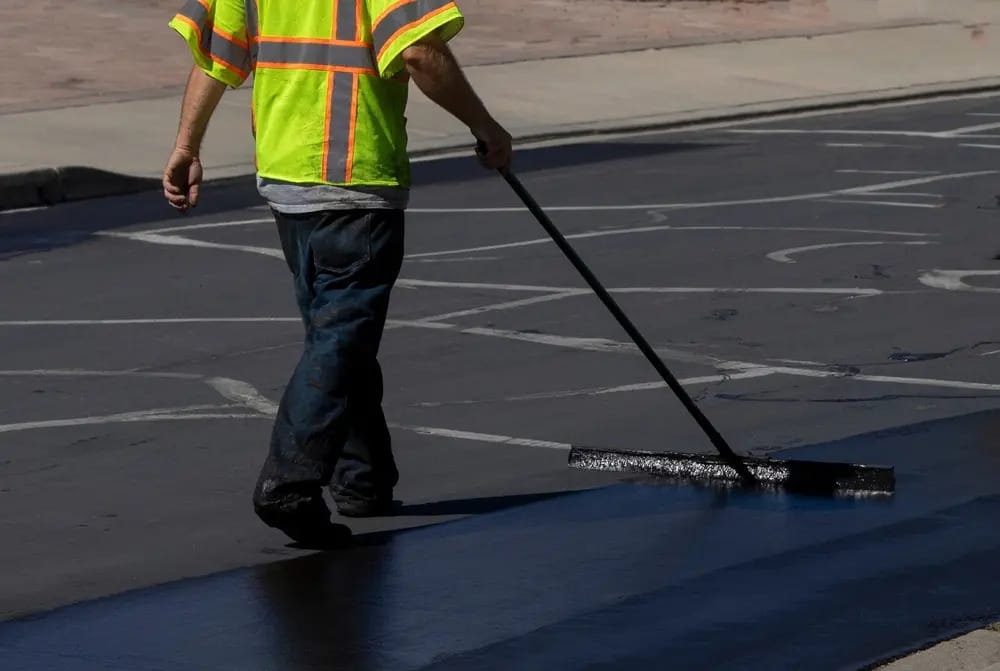
Once the asphalt is sound and dry, we apply the sealer. For commercial parking lots, we typically use a coal tar or asphalt emulsion sealer designed for high‑traffic areas, mixed with sand and additives for skid resistance and durability. Application is by spray, squeegee, or a combination, depending on the condition of the surface and the proximity to buildings and vehicles. We usually apply two coats in most traffic areas and may add a third coat at entrances or loading zones that see heavy turning and braking.
After the sealer has cured, we return to re‑stripe the lot according to your layout and local codes. That includes standard parking stalls, accessible spaces with required signage and markings, fire lanes, and any custom markings like numbering for reserved tenant spaces. Only once the lines are dry do we remove barricades and reopen the lot.
Materials, Options, and What Affects Your Sealcoating Cost
Not every parking lot or budget is the same, so we walk you through material and planning options that actually fit your property.
Most Nashville commercial clients choose a refined coal tar or high‑quality asphalt emulsion sealer. Coal tar resists gasoline and oil drips very well, which is important for gas stations, restaurants, and high‑traffic retail. Asphalt emulsion has lower odor and is often preferred for medical offices, schools, and apartment communities. We also select the right sand load and additives to balance traction, flexibility, and color depth.
Cost is driven by several factors. Total square footage is the obvious one, but the real driver is condition. If your parking lot has a lot of open cracks, potholes, or base failures, we will recommend repairing those first. Crack filling and patching add cost up front but help the sealer last and keep water out of the base, which is crucial on Nashville’s clay soils that soften quickly when saturated.
Layout and access also matter. A busy Hillsboro Village retail lot that must stay partially open will take more labor and phasing than a quiet industrial yard that can be shut down for a weekend. Working in multiple phases, moving barricades, and scheduling around your peak hours can add to the project time but prevents lost business.
Timing and weather are another factor. Sealcoating works best when the pavement is dry, surface temperatures are warm, and there is no rain in the forecast for several hours. Nashville’s spring and fall are ideal. Summer is workable, but we have to plan around afternoon thunderstorms and high temperatures that can cause the material to set too quickly if not handled correctly. To keep costs fair, Precision Asphalt Nashville schedules projects in weather windows that let the sealer cure properly so you are not paying to redo failed areas later.
Finally, we can review optional upgrades such as additional coats in drive lanes, premium fast‑dry additives for sites that must reopen quickly, and layout changes that can add more parking spaces or improve traffic flow. We always explain what is a true need versus what is an upgrade so you can make informed decisions.
Parking Lot Maintenance: Keeping Your Investment Performing
Sealcoating is one part of a complete parking lot maintenance plan. If you want your asphalt in Nashville to last, a few simple habits make a big difference.
Routine sweeping or blowing keeps grit, leaves, and trash from holding moisture against the surface. For retail centers or restaurants along Murfreesboro Pike where traffic is constant, quarterly or monthly sweeping can help you spot early damage before your customers do. Oil and coolant leaks from parked vehicles should be cleaned quickly to protect even a sealed surface.
We recommend a full visual inspection at least once a year, ideally in late winter or early spring, to catch new cracks that formed during freeze‑thaw cycles. Narrow cracks are far less expensive to seal and almost invisible once sealed and recoated. Left alone, they widen, branch out, and allow water into the base layer, which causes the familiar alligator cracking and potholes you see throughout aging Nashville lots.
For properties with heavy truck traffic, such as distribution facilities near I‑24 or small warehouses, it is important to understand that trucks concentrate loads on small areas. These turning and staging zones may need more frequent patching and thicker or more frequent sealcoating than the rest of the lot. We can map your traffic patterns and create a targeted maintenance plan so you are not overpaying to treat low‑use areas the same way as high‑stress ones.
In many cases, we set up a long‑term schedule: annual crack sealing, sealcoating every 3 to 5 years depending on exposure, and striping touchups as needed. With that structure, you always know what is coming and can budget for maintenance instead of being surprised by major repairs. Precision Asphalt Nashville keeps records and photos of your lot so we can track how it performs and adjust the plan if conditions change.
What Nashville Property Owners Should Know Before Hiring
Choosing the right contractor for parking lot sealcoating in Nashville is as important as choosing the right material. A low bid can cost more in the long run if the sealer is thinned out or the prep work is rushed.
Ask any contractor exactly how they prepare the surface, how many coats they apply, what mix design they use, and how they will handle traffic control during the project. You should hear clear answers about cleaning methods, crack filling, priming oil spots, and specific products. If the focus is only on a price per square foot without talking about condition or repairs, that is a red flag.
You should also ask for a schedule that fits your business. For example, we often sealcoat churches in Nashville on Fridays and Saturdays so the lot is ready for Sunday services, and we stage work at restaurants and retail centers overnight or early morning to avoid peak hours. A contractor that understands local traffic patterns and is willing to phase the work around your operations is far more likely to protect both your pavement and your revenue.
Local references matter. Parking lots in Middle Tennessee age differently than those in drier or colder regions because of our combination of heat, humidity, and sudden storms. Precision Asphalt Nashville can show you completed sealcoating and maintenance projects at office buildings, medical facilities, and multifamily communities around the city so you can see how our work holds up under real Nashville conditions.
Finally, make sure the contractor is properly insured and follows local codes for striping, accessible parking spaces, and fire lanes. Incorrect striping can lead to fines or rework. We stay current with ADA and Metro Nashville requirements, so your lot is not only attractive but compliant.
If you are unsure whether your parking lot needs a full resurfacing or if sealcoating and maintenance will be enough, we are happy to walk the site with you, explain what we see in plain language, and give you options at different price points so you can choose the right solution for your property and your budget.